21 avril 2021 mercredi
50 degrees F, partly cloudy
9 mph, N wind
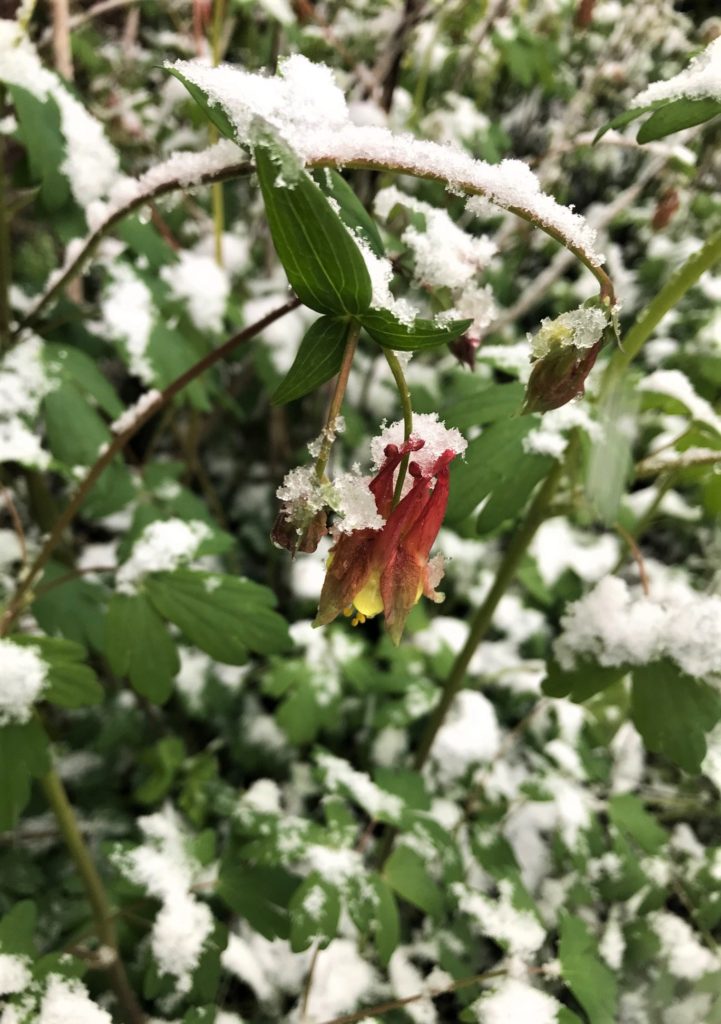
Yesterday brought April snow to the Illinois County. This unexpected weather follows an unsettled weather pattern that has settled over the region these past weeks, with periods of rainy cool weather followed by unseasonably warm sunny days. The asparagus in the Fort jardin certainly had some exposed spears that had risen to break through the dirt in the raised bed surface in the recently 70-degree temperatures, only to be cloaked in this recent snow. The weather pendulum has been swinging wildly and our efforts in the garden have been struggling to keep up. A reminder of the unpredictability of early spring weather is exemplified by the French phrase “En avril, ne te découvre pas d’un fil”, translated means- “In April, don’t remove a thread of clothing.” This proverb reminds us to not be too optimistic when warm weather arrives, which for gardeners is a difficult task. As we scurry to cover our tender plants to protect them from the freezing cold nights, gardeners everywhere hope the weather soon settles into the seasonal norm so we can get on with the business of serious gardening. The importance of protecting their growing crops would have been a grave undertaking for our Illinois country’s French ancestors three centuries ago. Their winter provisions would have been desperately depleted by April and their survival would have been dependent on the new crops growing in their potager. Eighteenth-century advice for the era’s gardeners gives us an idea of early spring efforts in their potagers.
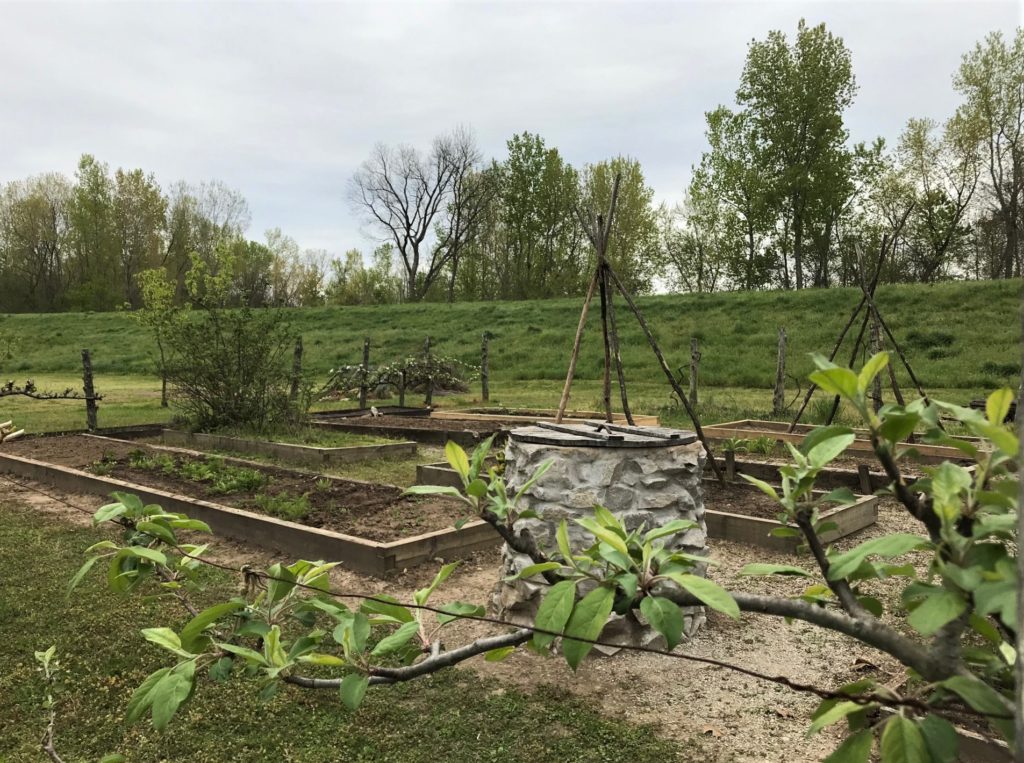
Work to be done in April
The work to be done in the Garden, and chiefly the Culture of it for Kitchen or Edible-Plants will admit no further Delay.
Begin to Clean the Walks and Alleys of the Garden.
Continue to Sow Seeds, as Sorrel, Parsley, Cardons of Spain, Broad-Ribb’d White Beets, Scallions, White & Red Onions, & etc.
Water the young Trees that were Planted in Autumn, and those Graited in the Closer.
Trim your Cucumbers and Melons, and Sow some more in Hot Beds, to be Planted out in the Naked Earth.
Plant Strawberries, and Pinch off the Strings and Shoots of the old Plants…
Cover the Peach-Trees that are in Bloom to keep ‘em from the Frost. I make use of Peas-Halm*, and take it not away till the Peaches are as big as my little Finger. Do the like to Wall-Aprikots and Plum-Trees.
Francois Gentil, Le Jardinier Solitaire, the Solitary Or Carthusian Gard’ner. 1706
*stems or stalks collectively, as of grain or of peas, beans, or hops
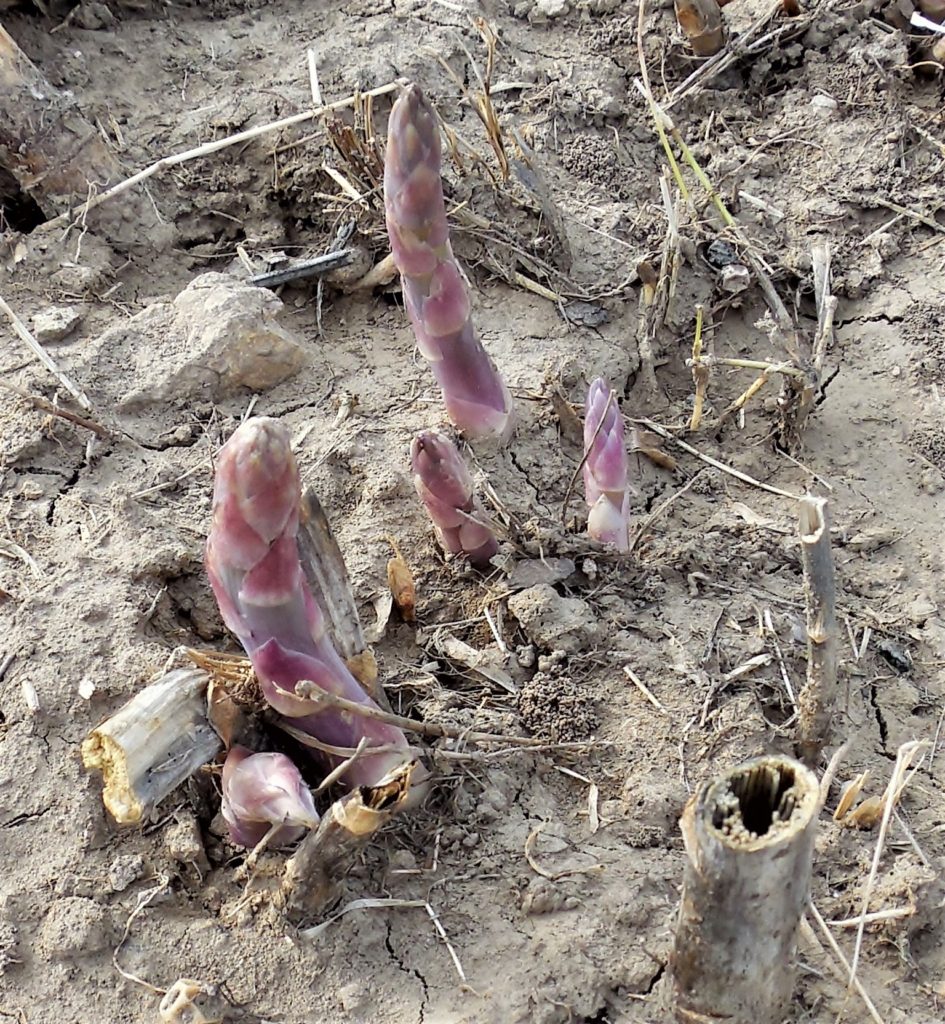
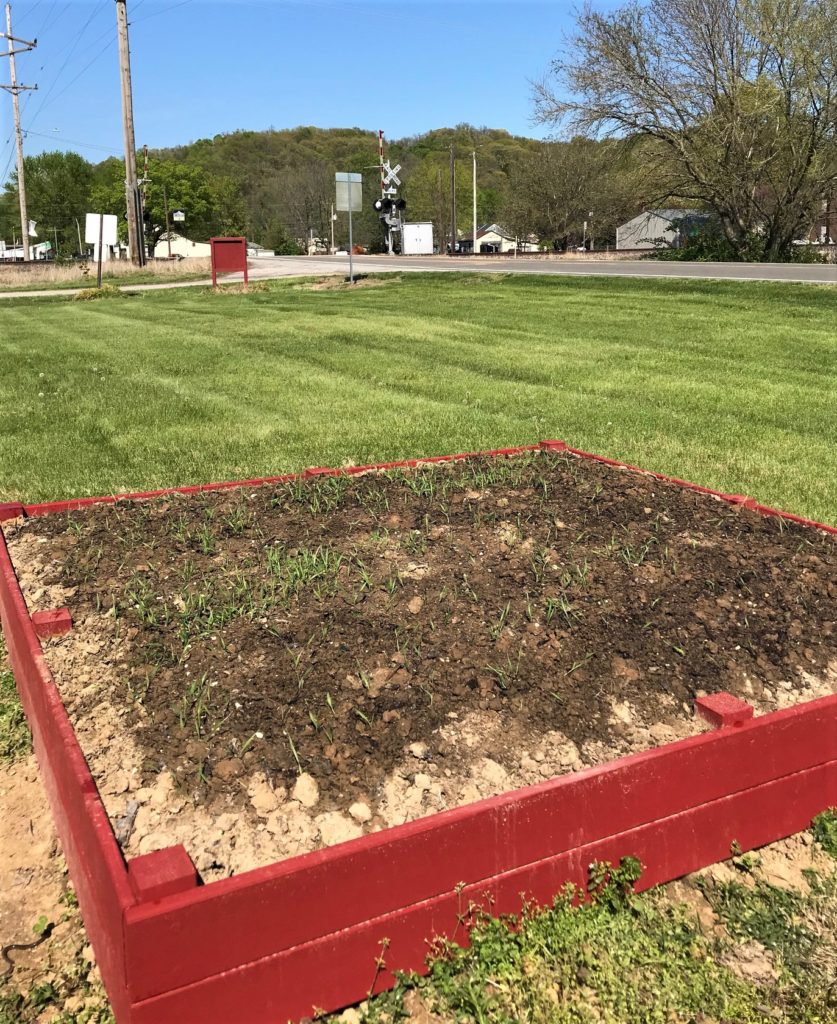
One of the jardin’s early spring staples and one of the most anticipated, is the early April emergence of asparagus in one of the raised beds dedicated to its growth. Unfortunately, the harvest of this favorite has been limited over these past unseasonable cool weeks, spurts of growth on the occasional warm days only to slow on the many colder days. In years past, during the Fort de Chartres Annual Trade Faire, visitors to the garden usually can’t wait to harvest those emerging tips for a fresh spring taste. Sitting on the garden’s bench, while basking in sun-warmed daytime rays, asparagus spears appear to break through the bed’s surface and grow in front of our very eyes in the warm sunshine of early spring. Often these same spears are harvested that late afternoon and prepared as part of our camp’s evening meal. Just as this vegetable is not only a favorite in today’s jardin potager but was also a much-loved crop in French and English Colonial gardens, with considerable space given to their cultivation. John Randolph’s, “A Treatise on Gardening, by a Native of This State” (Richmond, 1793) gives careful asparagus cultivation instructions:
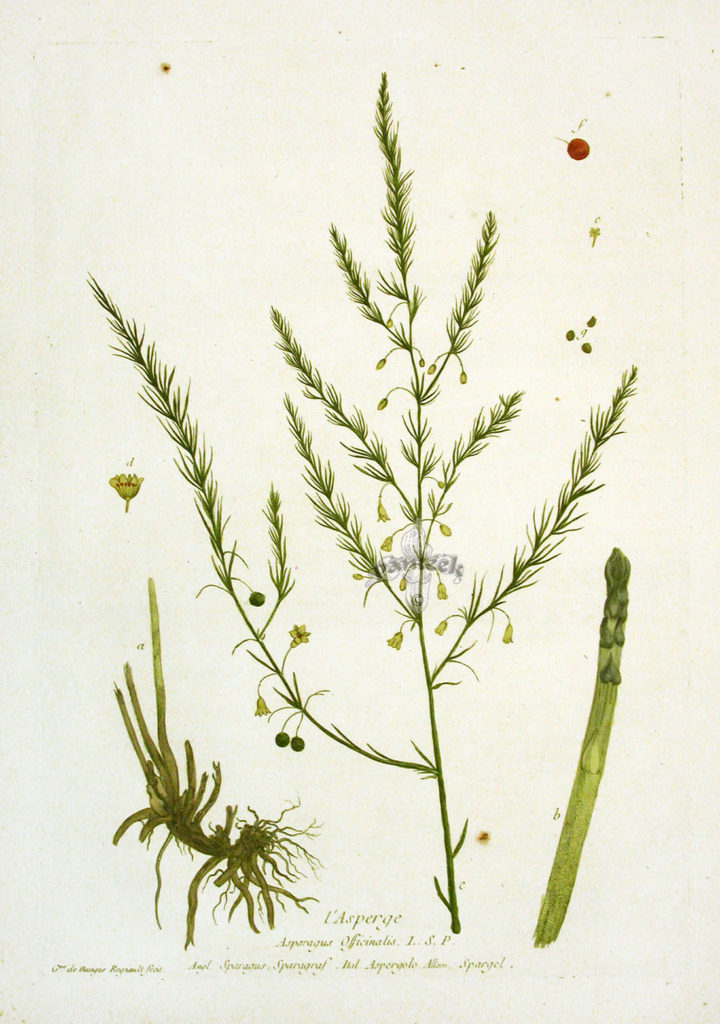
ASPARAGUS …. Growth, a young shoot; are to be propagated either from the seed or roots. The seed are contained in those things which look like red berries. These are to be gathered from the most flourishing stalks, and laid in a tub for about three weeks to ferment. This will rot the husks, which will swim upon being rubbed between the hands, and having water poured upon them, but the seed will go to the bottom. Pour the water off gently, and the husks will be carried along with it. This being done two or three times; the seed will become perfectly clean. They are then to be laid on a mat or dish, and exposed to the sun to dry. When that is done, they may be put into a bag and pricked out in February or March, in beds about a foot asunder every way, and never to be transplanted. But if they are to be transplanted, they may be sown as under the surface of the ground, with the bud erect, against the side of the earth perpendicularly cut, so that the extremity of the roots may touch each other. This will put them about a foot asunder; the best time for transplanting them is when they begin to shoot, but before they appear above ground. The principal thing to be regarded with these plants, is the bed in which they are to be placed. A great apparatus was formerly made use of, but now seems on all hands to be disregarded. Nothing more is necessary than to make your beds perfectly rich and light, that the head may not be obstructed in its growth upwards. Two feet of mould and dung is depth sufficient for any plant. They are to be kept clean from weeds, and nothing sown upon the beds. The fourth year from the seed they may be cut moderately, but it is better to wait till the fifth. About October the haum should be cut down, and the beds covered with rotten dung about six inches, part of which may be taken off in February or March, and the remainder forked up in the beds, which will not only assist the roots, but raise the beds in some small degree yearly, which is an advantage. A spade is a very prejudicial instrument to them. Cut with a blunt pointed knife (some use a saw) and separate the earth from the plant, and cut it so as not to endanger the head of another that may be shooting up. There are joints in the roots of the Sparrow grass like the Wire grass, from every one of which a head is produced. Butchers ‘ dung is what it delights in. I would recommend your beds to be about four feet wide, that the grass may be cut without treading on the beds, which often hardens the earth so much that the grass cannot come up, and must of course perish. In these beds I would have three rows; for the roots ought to have a sufficient quantity of earth on all sides. Beds thus managed, Miller says, will last ten or twelve years; Bradley says twenty, and I am inclined to join with the latter.
Taking a bit of a stroll through asparagus’ cultivation history reveals that this treasured vegetable has been consumed for over 2 millennia. Garden asparagus (Asparagus officinalis) is only one of several species of asparagus that are edible. Our modern name for it is the Medieval Latin form of the old Greek word asparogos, which means shoot or sprout., and its name in most other modern languages is easily recognized as of the same origin: asperge (French), Spargel (German), asperge (Dutch), espárrago (Spanish). English and American colloquialisms for this plant name are sparagrass, sparrowgrass, and among large growers just “grass.” As a distant cousin of the onion, asparagus is a member of the lilaceae family and its history coincides with the recorded cultivation of leeks. It is thought to have been first grown by the Macedonians in approximately 200 B.C.E. and appears in Egyptian tomb drawings as early as 4000 B.C. This early asparagus was tall and narrow, much like our wild asparagus. Asparagus with thicker stems that resemble what we enjoy today didn’t evolve through cultivation until the eighteenth century. The Greeks apparently collected this thin form of asparagus only from the wild, since they gave no directions for its cultivation. Asparagus was of Greek interest for its biological and pharmaceutical qualities. Today this plant has been discovered to contain asparagines which is known for its diuretic properties. Historically it was also noted as treatment from heart problems to toothaches and a liniment made from crushed asparagus was used to treat bee stings and other ailments.
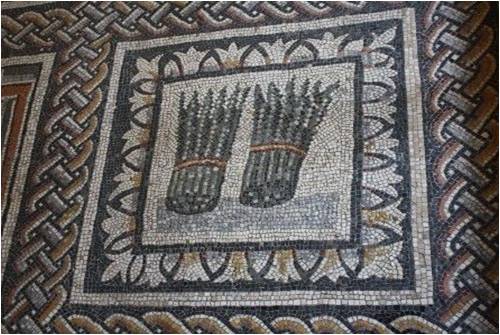
Romans as early as 200 B.C. gave detailed gardening instructions, preferring the seed of wild plants for planting. The Romans appreciated the plants for culinary reasons as well and it was eaten as a tasty entrée or as a vegetable accompanying fish. It is noted that Caesar’s legions returning from the Orient brought the asparagus with them, spreading this plant westward across the European continent. In Roman times asparagus was eaten fresh or dried for later use, to be cooked simply and quickly prepared by boiling the dried shoots. The Emperor Augustus is supposed to have been very fond of it and to have originated a saying, “Quicker than you can cook asparagus.” Europeans and Britons have been eating asparagus for as long as there are any records about them and has been loved in France for many centuries. In the seventeenth-century asparagus was widely cultivated in France and it was recorded Louis XIV was very fond of it. Mentioned in the era’s accounts, these vegetable spears were preferably cultivated and harvested when they grew to the size of a swan’s feather. In the 18th century, asparagus was more widely available in local markets and was featured in recipes found in a large number of the era’s culinary works. Today Europeans tend to prefer white asparagus, which is grown under mounds of earth to keep it from turning green. The resulting white asparagus is usually a pale shade of apple green, often with a hint of purple at the tips. Precoce D’Argenteuil, white with rose-colored buds, was an heirloom variety much favored in France.
The introduction of asparagus into the Americas occurred by the eighteenth-century, quickly accepted because of its old popularity and it is believed to have been taken to those lands by voyagers to the continent. There is early evidence, based on seed catalogues, of the crop being sold on a commercial level in the early 18th century in eastern parts of the country. During the eighteenth and early nineteenth-centuries and for decades after, the non-French colonists of America admired French food serving styles and social graces, the ultimate in refinement. The food in these American colonial-period gardens, as well as the style of the gardens themselves, reflected this French fascination. Extensive instructions for asparagus planting and cultivation were documented by renowned Philadelphia nurseryman Bernard McMahon in his American Gardener’s Calendar, first published in 1806. Swedish explorer Pehr Kalm wrote of seeing wild asparagus growing in fields of loose soil near fences throughout New Jersey during his travels in the 18th century and Thomas Jefferson is documented as have been growing asparagus at Monticello. Heirloom asparagus varieties popular during the Colonial-era include the Washington strain, including Martha Washington, Mary Washington or Waltham Washington and Joseph Cooper’s pale green asparagus was also popular in Colonial America. Some of these varieties, along with others, are available today from heirloom seed sources, ordered online or through the mail.
French recettes (recipes) of the seventeenth and eighteenth-centuries reflect this affection for this much-favored spring vegetable. Terms in French cuisine then and now include:
Asperges Blanches-White asparagus.
Asperge des Bois or Asperge Sauvage-Wild asparagus.
Asperge Fraîches-Fresh asparagus.
Asperge Tiède-Warm asparagus.
Asperges Vertes-Green Asparagus.
Asperges Violettes-Purple-tipped asparagus. (Violetto d’Albenga).
Pointes d’Asperges-Asparagus tips
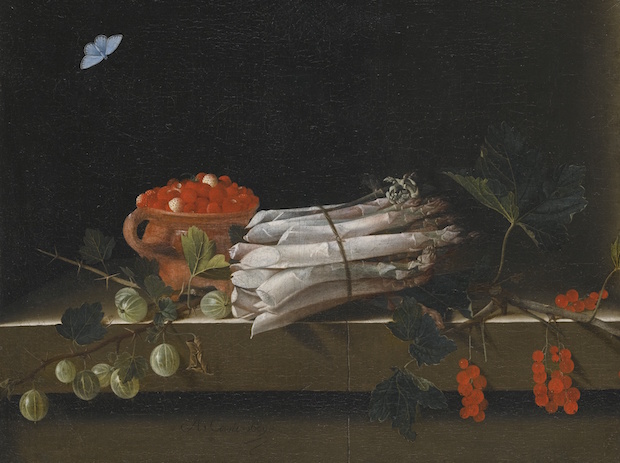
François Massialot’s published 1702 cookbook titled, “The court and country cook: and plain directions… “ lists menus for dinners served to French royalty late in the seventeenth-century, including the duc de Chartres and his sister. An interesting connection to Fort de Chartres, as Fort de Chartres was named to honor Louis, duc de Chartres, son of the Regent of France. A portion of Massialot’s entry on asparagus is as follows:
Asparagus is eaten several Ways and Potages are made of it, with different sorts of Fowl, or with green-Pease-soop; of which divers Examples have already been produced. ‘Tis also usually serv’d up in Intermesses, Out-works, and other Dishes; sometimes in a Sallet, sometimes in white or think Gravy and sometimes in Cream.
A few samplings of his asparagus recettes:
Asparagus in Cream
Let your Asparagus be cut into small Pieces, and scalded in a little boing water: Then let them be toss’d up in a Stew pan with fresh Butter, or with Lard, if you have no very good Butter; taking care that the whole Mess be not too fat: Then put in some Milk and Cream, and season it well; adding also a faggot of fine Herbs. Before this Dish is serv’d up to Table, it would be required to beat up one or two Yolks of Eggs, with Milk-cream, in order to thicken your Asparagus.
The same thing may be done in the dressing Artichoke-bottoms and green Pease, but for the latter some Sugar is to be used, with a little chopt Parsely, and then they may be order’d in the same manner.
Asparagus may be also serv’d up among green Pease, with a green Cullis of Pease-pods or somewhat else: Then put a Crust of Bread in the middle, and garnish your Dish round about, with Pain de Jambon.
Asparagus in Gravy
Dress your Asparagus cut into Pieces, with Lard, Parsley, Chervil chopt small and a Ciboulet: Season them with Salt and Nutmeg, and let them soak in a Pot over a gentle Fire: Then take away the Fat, put therein some Mutton-gravy and Lemon-juice, and serve it up, with short Sauce.
To preserve Asparagus
Cut off the hard Stalks, and give them one seething with Salt and Butter: Throw then again into fresh Water, and let them be drain’d. When they are cold, put them into a Vessel in which they may lie at their full length, with some Salt, whole Cloves, green Lemmon, and as much Water as Vinegar: Cover them with melted Butter, as ‘tis usually done with Artichokes; putting a Linnen-cloth between, and keep them in a temperate Place. In order to make use of them, let them steept and boil’d as the others.
Ciboulet-Chives
Cullis-a strong broth of meat, strained and made clear for someone who is ill or infirm; also, a savory jelly
Intermesses/Out-dishes-refers to the plate placement of a particular dish on a formal dinner table layout of the era
Pain de Jambon-block of ham
Short sauce-sauce derived from a mother sauce and then has flavorings and seasonings added to create a new sauce. Also referred to as a “secondary sauce”
And although many colonial-era cookbooks abound with asparagus recipes, let’s finish this post with this simple asparagus marinade recipe that was reported to be often served at Monticello. Thomas Jefferson would have been served this very dish during his time spent in Paris when he served as Minister of France.
Marinated Asparagus
1 ½ pounds asparagus stems peeled and trimmed
2 tablespoons red wine vinegar
½ cup olive oil
Pinch of fresh thyme
Pinch of chopped fresh parsley
1 egg, hard cooked and chopped
½ small red onion, finely chopped
1 tablespoon fine capers, drained
Salt and freshly ground white pepper
Wash the asparagus and trim the tough ends of the stalks. In a large saucepan, bring 2 quarts of lightly salted water to a boil over high heat. Place the asparagus in the water and cook until just tender, 2-3 minutes.
Drain asparagus. Add enough cold water to cover the asparagus. Let stand about 5 minutes, until the asparagus is cool.
Drain again and pat the asparagus dry with paper towels. In a medium-size mixing bowl, whisk together the vinegar, oil, thyme, parsley, egg, onion, and capers, and salt and pepper to taste.
Place the asparagus on a serving platter. Pour the vinaigrette evenly over the asparagus. Let the asparagus marinate in the dressing for a few minutes (optional). Garnish with additional chopped egg and parsley, if desired. Serve at room temperature.
A Tale of Two Asparagus Dishes, by Tangie Holifield, April 2020
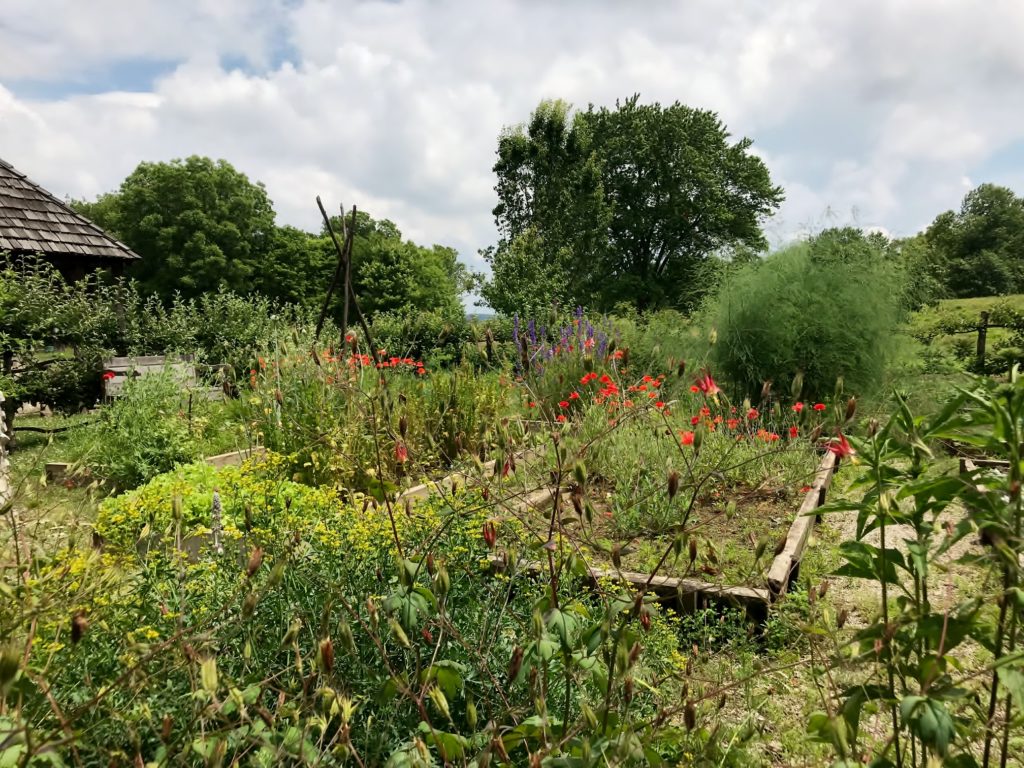
As early spring gives way to the more moderate temperatures of mid-May, there is a fond hope that soon we might meet in the potager. Mayhaps we can sit on the garden bench near the heirloom French apple trees, taking in the beauty of the spring garden in the bright sunshine. We could spare a bit of time to watch the garden’s asparagus spears emerge and grow in front of our very eyes in the warming soil of the garden’s raised beds. These moments would be well spent in admiration of this perennial garden vegetable, marveling at its storied history.
Until next time, mes amis-à la prochaine!
https://allaboutfrench.com/avril-ne-te-decouvre-pas-dun-fil
https://www.cultures.ca/en-CA/asparagus/origins-asparagus
https://www.grit.com/farm-and-garden/how-to-grow-asparagus
https://blog.gardeningknowhow.com/tbt/heirloom-asparagus-plant-history/https://qnholifield.com/2020/04/12/a-tale-of-two-asparagus-dishes/





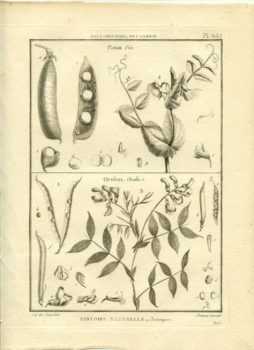
 Offering heirloom seeds has been an important and ongoing component of this independently funded heritage garden project located at Fort de Chartres and it has been a disappointment these past two seasons not to be able to host the usual site garden events, where free small seed packets and seed growing information could be shared. Seasonal flooding and the current pandemic have restricted Fort site use but these seed sharing opportunities will resume once normalcy can safely return to our lives. So, for now, my La Jardiniere’s heirloom seed collections can offer a way to share the French Colonial and Native Garden seeds and their history. Currently these heirloom seed collections now include seven different types. Newly added this fall, a French Colonial Heirloom Annual Flower Collection showcasing the easy to grow and much-loved period annual flowers grown in the Fort de Chartres jardin potager. All of the heirloom seed packet collections are packaged in the typical manner of an eighteenth-century letter and sealed with red wax. The package itself opens to detailed information reflecting the history and additional growing details of each variety. Ten individual small seed packets are contained in each vegetable, flower, and herb collection packet. The Three Sisters Native Garden collections contain corn, bean, and winter squash varieties plus additional information about this Native Peoples tradition. This summer there was hope to add a Late Summer-Early Autumn Seed Collection but was unable to locate adequate seed for the collection, so this new vegetable collection will have to wait until next year.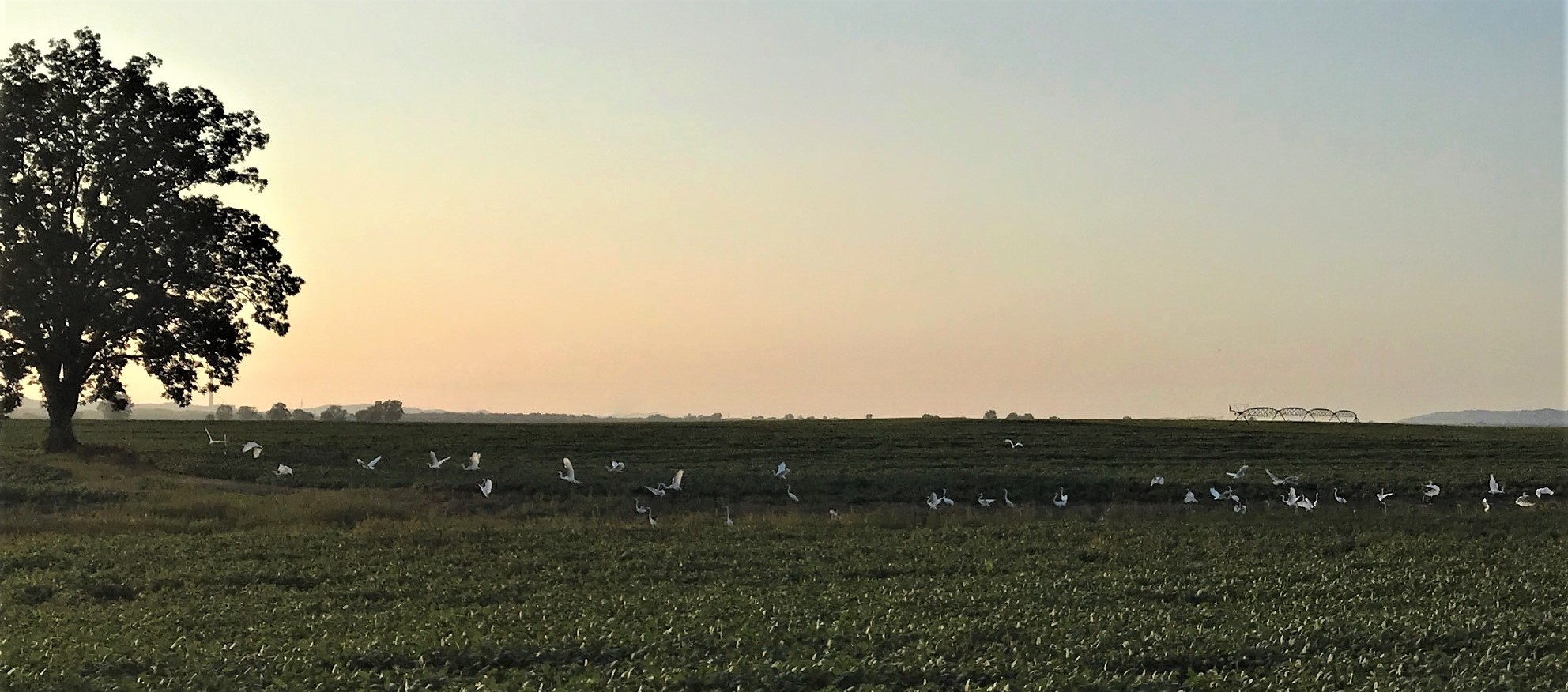
 The beginning of the autumn season brought warm weather and sunny skies, perfect conditions to gather the garden’s heirloom produce, seeds, and its largest crop yet of heritage apple and pears. October’s recent frosts and colder weather have brought an end to the last harvests of Cornfield beans, Bull Nose peppers, and Listada de Gandia eggplants. As the more hectic garden work subsides, now time is spent gathering the last seeds for next year and finish cleaning up spent frost-bitten crops while nourishing and tending the fall-planted, cold-hardy vegetables. These autumn vegetables are chosen for their cold tolerance and shorter growing season, such as cabbage, carrot, kale, leeks, lettuce, peas, radishes, and spinach.
Recent Comments