Un journal d'un Jardin Potager du Pays des Illinois

Category: Uncategorized (Page 2 of 18)

Le jardin de fin d’hiver

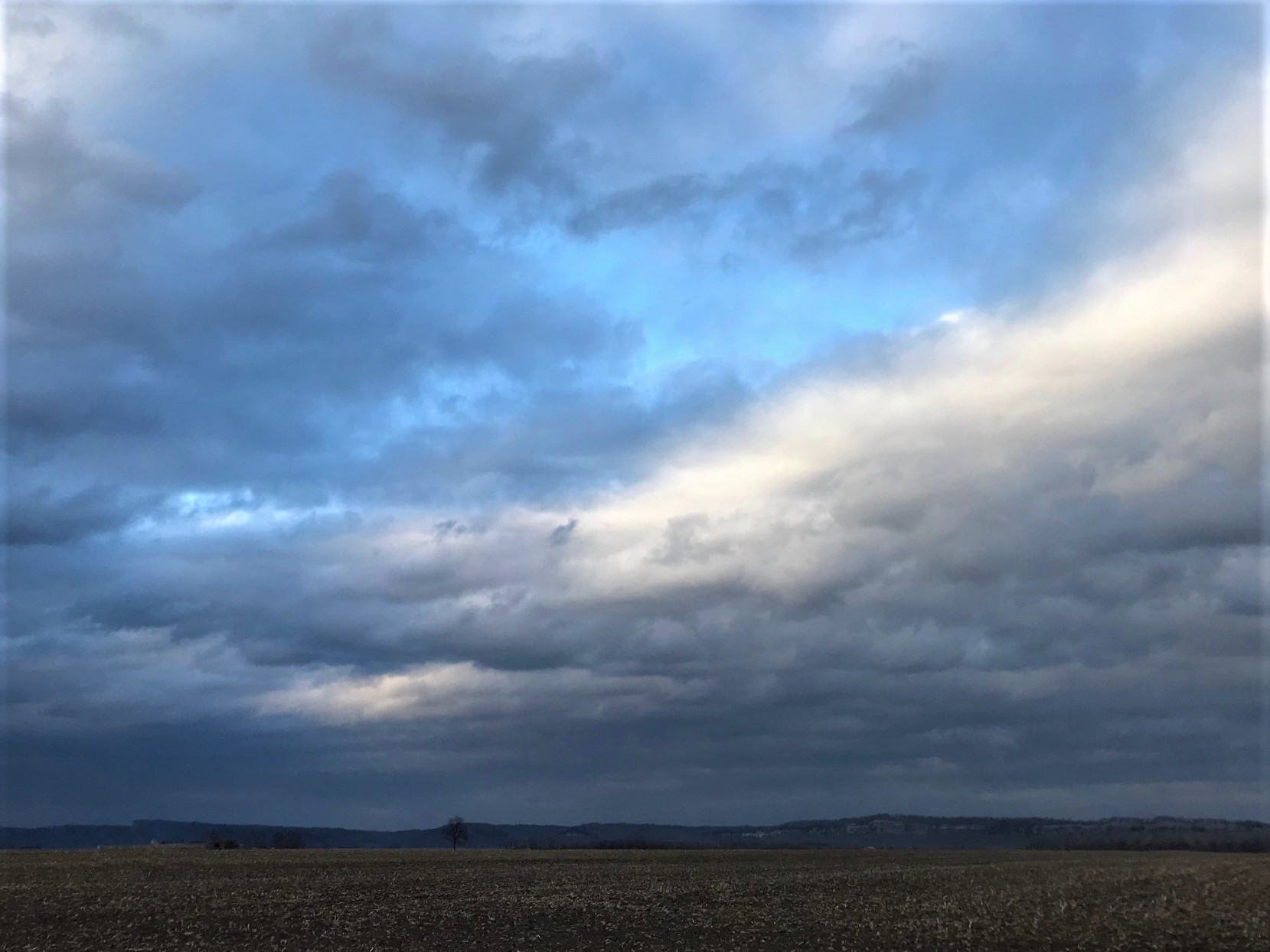
Illinois country winter sky.

7 mars, 2022 lundi

37 degrees, cloudy

5 mph, N wind

And so, it begins. The new garden season is heralded with the pruning of the Fort’s espaliered French heritage apple trees. “How well they may bloom and how well they may bear, so we may have apples and cider next year.”* Throughout the seventeenth to nineteenth centuries, as noted in French gardening treatises, espaliered fruit trees maximized fruit production in the jardin potager. These hedge rows of pruned fruit trees marked garden divisions and were used to help screen raised bed gardens from the elements, providing a protective environment conducive to growing. To fulfill these functions, sometimes frameworks were created of either trellises, lattice work, or rails to give support to these trees.

Bernard M’Mahon, eighteenth-early nineteenth-century self-described “Nursery, Seedsman, and Florist,” wrote a popular calendar for American gardeners in 1806 and ran a successful nursery and botanic garden in Philadelphia. His definition of espaliered referred to “hedges of fruit-trees. . . trained up regularly to a lattice or trellis of wood work. . . commonly arranged in a single row in the borders and boundaries. . . of the kitchen-garden.”
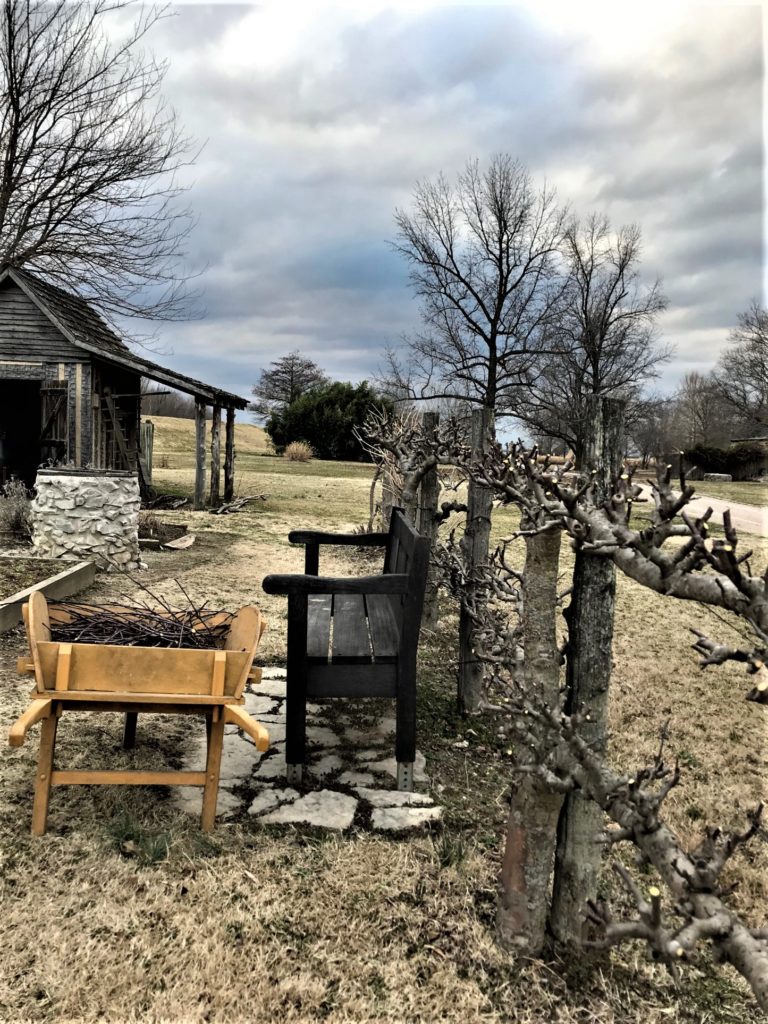
The recent Illinois country late winter weather continues to swing mightily between cold and warm temperatures, accompanied by frozen wintry weather-mixes and rain. While we feel like we are on a bit of a weather see-saw, the new season gardening efforts can begin with both the planning and sowing of seeds indoors along with outdoor garden work preparing raised beds and fruit tree/shrub pruning on those warmer more temperate days of the late winter jardin. On a recent February afternoon, my granddaughter helped sow cabbage and kale seeds indoors, along with a few other heirloom seed varieties that are more difficult to direct sow in the garden, jumpstarting the growing season. Always a joy to share these gardening activities with her whether indoors or outdoors, making this gardener feel like we are sharing our hope for the future and the garden year ahead as we prepare and plant seeds together. Joy, knowledge, and hope simply expressed in the act of preparing and sowing seeds .

While work may have just begun in the jardin, busy preparations have been ongoing for the upcoming Saturday, March 12th, Fort de Chartres Jardin Potager 5th Annual Heirloom Seed Swap from 10 a.m.-noon. The seed exchange will take place in the Fort de Chartres Guards’ Room* and free heirloom sample seed packets will be available for visitors. You can bring your favorite or extra seeds to the Fort and share your seed bounty while having an opportunity to select seed from the garden project or from others’ shared seeds. The seeds you might want to share do not necessarily need to be heirloom, just seeds you would like to share with others. Available during this event will be informational flyers about the direct sowing of seeds, raised bed soil preparation, companion planting, historical uses of vegetable and herbs, and my heritage seed collections for sale. The sales of the heritage seed collections support the Fort de Chartres kitchen garden project. Seed collection types include Early Spring, Spring-Summer, Fall vegetable selections, along with Herb, Flower, and Native Garden Mound options.  After a break and weather permitting at 1 p.m., we will move into the Fort’s kitchen garden and learn about the upcoming growing season and which vegetable and flower seeds can be direct sown in late winter garden in the Illinois Country.  If it is too cold outside or the ground is too damp to work in the jardin in the afternoon, it will be lovely to visit indoors with anyone who stops by.

This event is free and open to the public. For any updated event information about this garden event, check the jardin’s FB page at www.facebook.com/fdcjardin. If you would like more information about the Fort de Chartres State Historic Site, Site Staff at 618-284-7230. For directions and site information, please visit http://www.fortdechartres.us/contact-us.
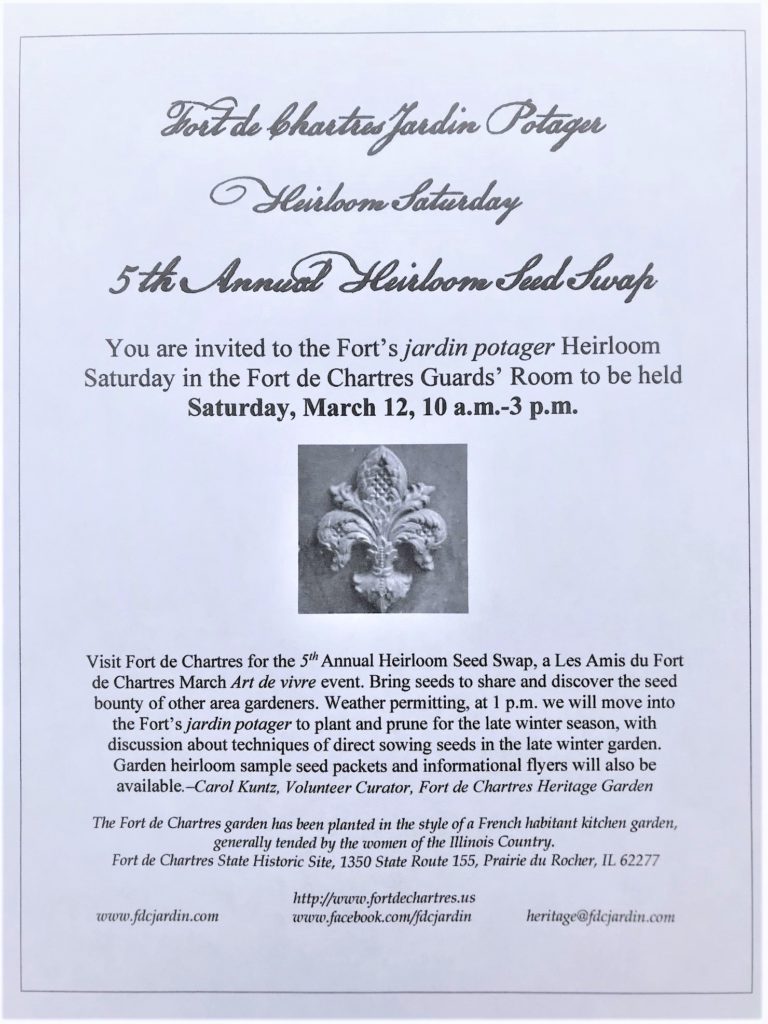
Hope to see you Saturday, March 12!

* Apple Tree Wassail, The Watersons, 1975 Album “For Pence and Spicy Ale”. Apple Tree Wassails are the songs that are sung to the health of the apple trees; the expression is also used for the overall celebration which usually takes place in the orchards or wherever there is an apple tree. This reference is made in memory of Norma, a true inspiration and force of nature. She and her family represent the power and value of tradition through song and story. The world is a less vibrant in her absence.  

**In the event of cold weather, the Seed Swap will move to the much warmer conditions of the Fort de Chartres Trading Post on the northern corner of the Fort site, the corner Fort building nearest the jardin potager.


À la fin d’octobre, novembre commence

30 octobre 2021 samedi

53 degrees, clouds

11 mph, WNW wind

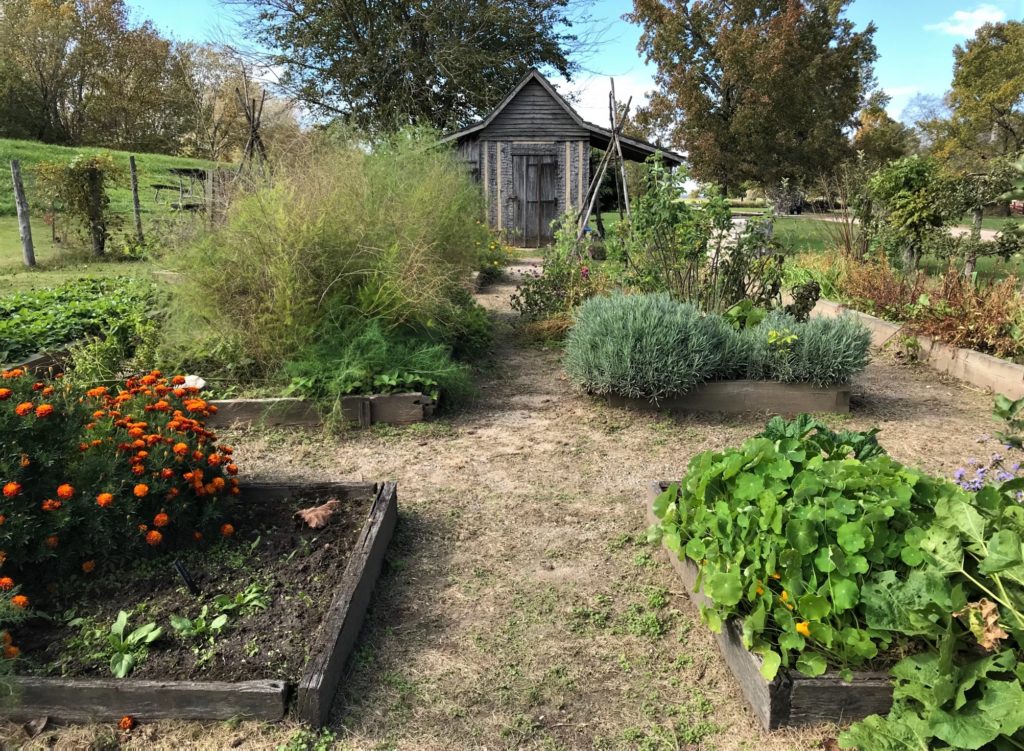
The kitchen garden at Fort de Chartres has been enjoying autumn’s warm temperatures and cool nights, offering an extended growing season that has been greatly appreciated. Recent rains are fueling new vegetable and flower growth and it is a seasoned gardener that realizes that the garden’s October-early November ephemeral beauty is to be enjoyed moment by moment, as who knows when our first frost will arrive.

The summer months were sweltering in the Illinois Country, offering very few moments of respite. Accompanying the difficulty of managing the growing season in the heat, there was very little rain which only amplified plant stress as a result of the related heat. Whenever possible, the garden’s fruit trees, shrubs, raised beds, and the melon bed were watered deeply. I was frankly amazed that some of the autumn vegetable seeds planted in the late summer garden actually germinated and began growing in the unseasonable warmth that followed August into September. Thank you to Sabre and Dan Deterding, Kathy Baird, and Fort staff Shawn Chesnek & Tim Helms, for helping water the potager on the days that I wasn’t able to make it to the Fort. Truly grateful for their garden assistance throughout the year.

October

Later end cut down your asparagus, and cover your beds with dung, and plant Beans for spring, sow cabbages twentieth; transplant Cauliflowers, plant Horse Radish, prick Lettuces into boxes, sow Peas for the Hot-Bed, Radishes; turf this month

– “A treatise on gardening /by a citizen of Virginia”, John Randolph, Jr. (1727-1784)*

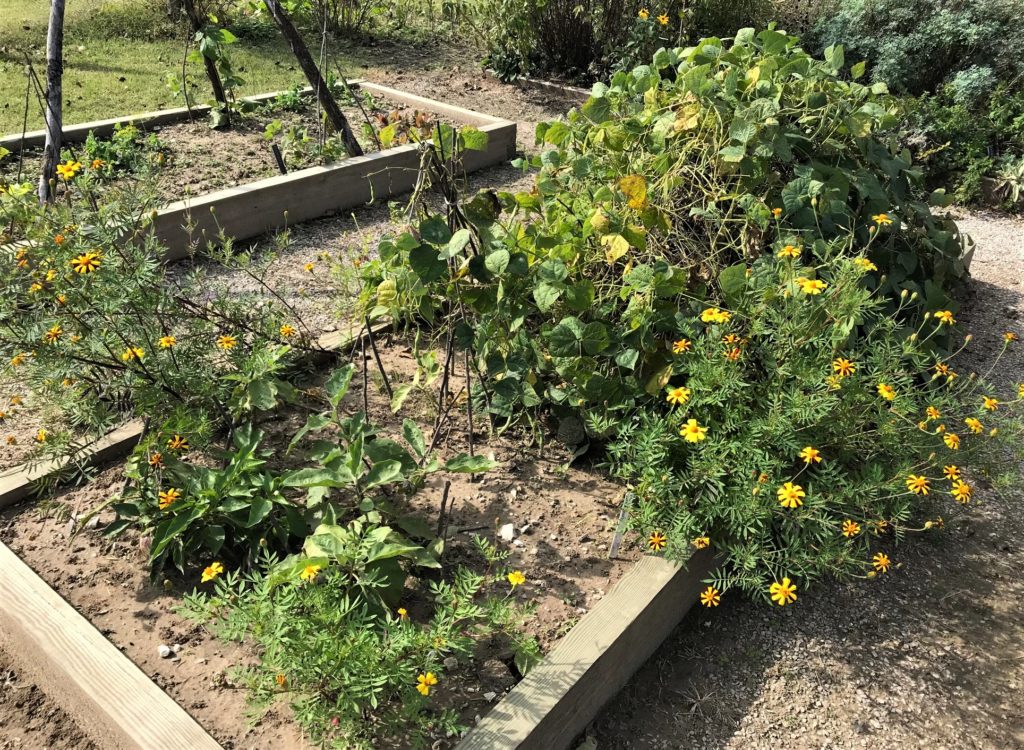
Taking stock of the fall garden, current successes to be enjoyed include continued harvest of heirloom beans, carrots, leeks, lettuces, peas, peppers, radishes, and squash with splashes of color from the Ageratum, French Striped Marigolds, Balsam, and Globe Amaranth. Summer harvests provided fine crops of corn, cucumber, herbs, winter squash, and watermelon-a gratefully accepted bounty after a difficult spring and early summer. Bringing some late summer and fall produce into the autumn kitchen offers adventure and anticipation, as it is time to prepare and preserve some of this seasonal bounty, especially the garden’s heirloom root crops and winter squashes. A culinary journey exploring new period recettes (recipes) of Illinois Country foodways awaits us as the use of these varieties are just waiting to be explored, their stories to be shared here over the winter months.

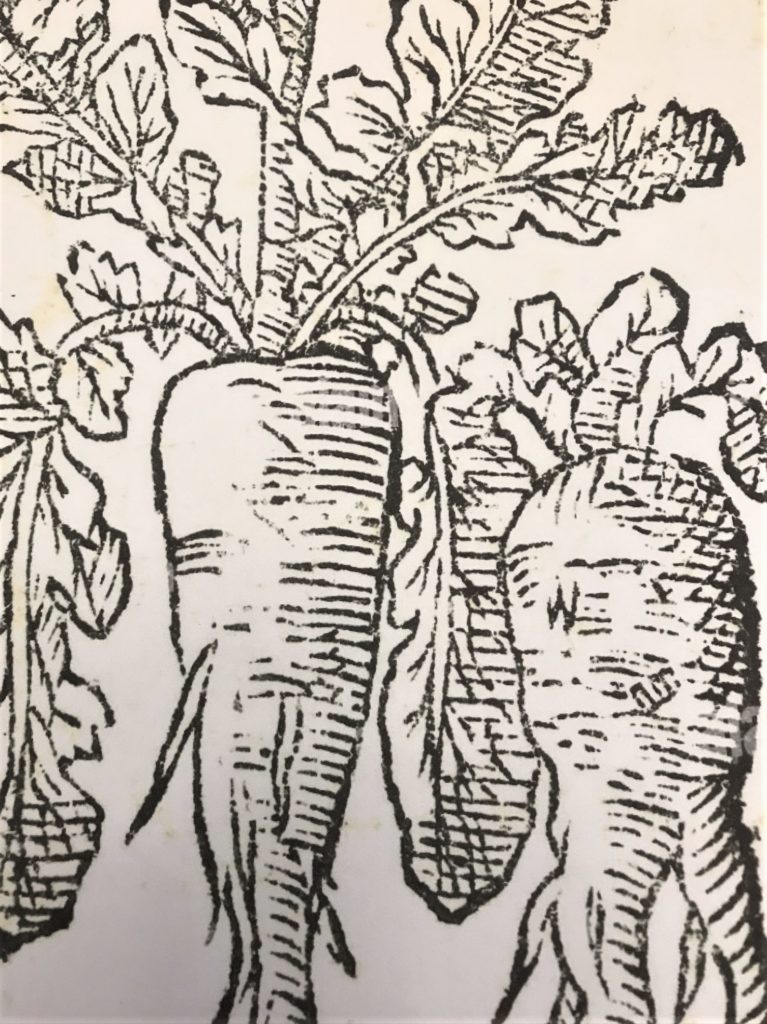
An eighteenth-century radish woodcut, French

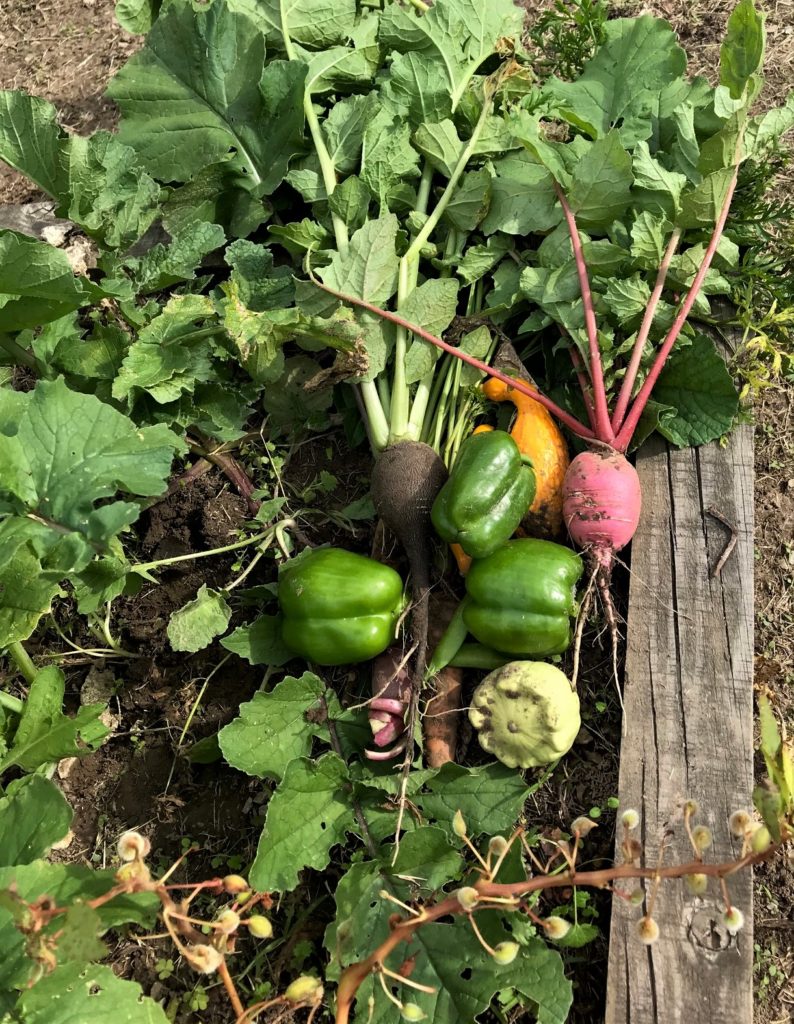
Such stories to be told like that of the Black Spanish Radish (Raphanus sativus var. niger,), its history stretching across centuries from ancient Egypt through medieval times and grown today in the Fort’s jardin potager. This striking radish, known in French as Gros noir rond d’hiver, with its black coarse skin grew easily in the autumn garden and is capable of withstanding frosts, has the ability to store well over cold winter months, and was known as a filling food stuff. With a rather pungent flavor that resembles horseradish, this vegetable offers a lovely translucent white crisp center that features a pattern resembling the rays of the sun. Culinarily this heritage radish could be simply roasted after being cut into slices, brushed with oil, salted, and served with a garnish of green onions. For once cooked, the crisp flesh softens and the flavor mellows, developing mild sweet peppery undertones. Black radishes were seasoned with herbs-such as chervil, thyme, parsley, chives, and mint and they were and are a wonderful addition to prepared dishes featuring apples, pomegranates, arugula, peas, carrots, celery root, truffles, seafood, and roasted meats-such as steak, pork, and poultry. This root vegetable, along with other similar crops, was used in soups and stews. Since this radish flavor can be strong, heirloom vegetable author William Woys Weaver reports that the uncooked radish is often shredded and marinated in salted water, then drained pressed dry, and served as a salad with vinegar and oil, and topped with minced fresh herbs. As with most everything grown in eighteenth-century kitchen gardens, there was a medicinal use as well and the Black Spanish radish was no exception. It was much valued as a treatment for digestive and respiratory issues. Today, through science, we recognize Black radishes are an excellent source of vitamin C and provide potassium, iron, magnesium, and vitamins A, E, and B. Gros noir rond d’hiver radishes, like many of the Fort’s jardin heirloom vegetables and flowers, have been long out of popular use. Today their worth only increases as we master how to prepare and use them in our homes and for the remarkable glimpses of history they offer through their forgotten flavors and traditional medicinal uses, much esteemed in previous centuries.

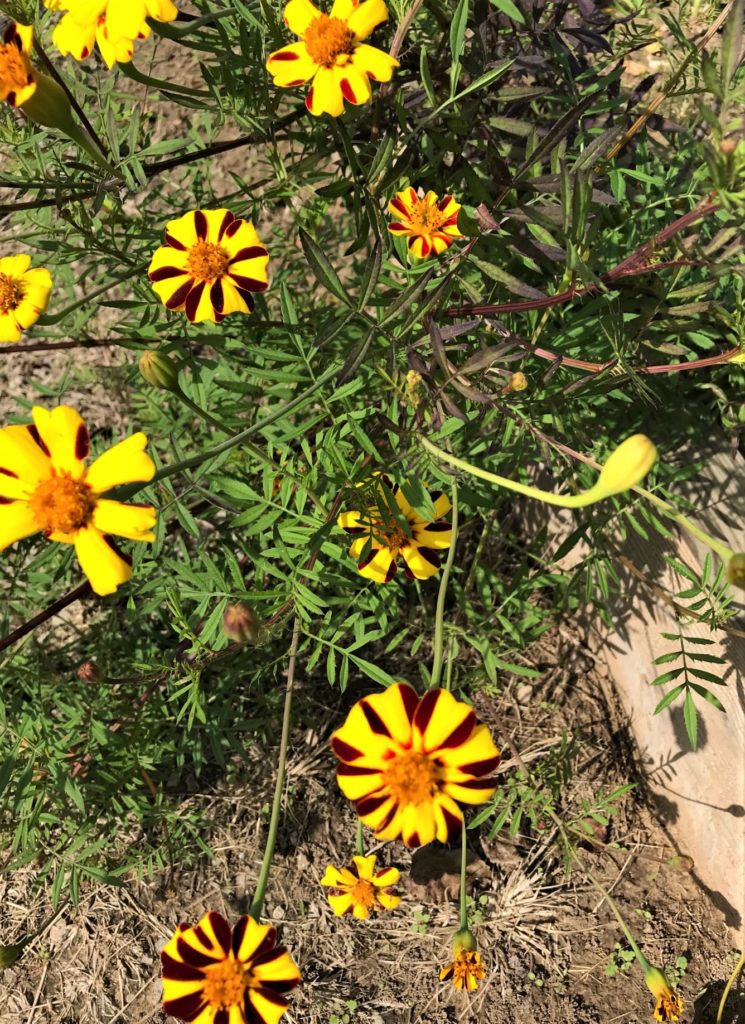
Striped French Marigold Tagetes patula

The ever-shortening fall days allow gardeners’ thoughts to turn to those tasks that prepare the garden for winter, while enjoying the last gifts from an autumn jardin. As the season marches on in our fall potager, there is still one other type of harvest still occurring-the harvest of any remaining garden seed to prepare for next year’s garden. And as garden work naturally slows in the cooler days ahead, your seasonal travels might include taking in Illinois Country scenery. If your journey leads to the American Bottom and Fort de Chartres State Historic Site, you are invited to visit this historic fort and perhaps enjoy a stolen moment to view and explore its kitchen garden now in its fall array. À bientôt!

*Around 1760, John Randolph, a governmental attorney in Williamsburg wrote the first American gardening book, “A Treatise on Gardening”, before fleeing back to England in 1775 at the outbreak of the American Revolution.  Randolph adapted garden dates to reflect Virginia’s climate, just as we should wisely adjust historic garden schedules to reflect warmer modern weather.

Visit https://www.facebook.com/fdcjardin for the latest Fort de Chartres Heritage Jardin Potager news.

Sources:

Abercrombie, John, 1767. “Everyman Every Man His Own Gardener”

Greene, Wesley, 2012 “Vegetable Gardening the Colonial Williamsburg Way”

Ville, Jean-Bapt. de (Publisher), 1707 Ed. ‘Histoire des plantes de l’Europe et des plus usitées qui viennent d’Asie, d’Afrique, et d’Amérique’

Weaver, William Woys, 2012. “Heirloom Vegetable Gardening: A Master Gardener’s Guide to Planting, Seed Saving, and Cultural History”

https://www.nature-and-garden.com

https://www.specialtyproduce.com

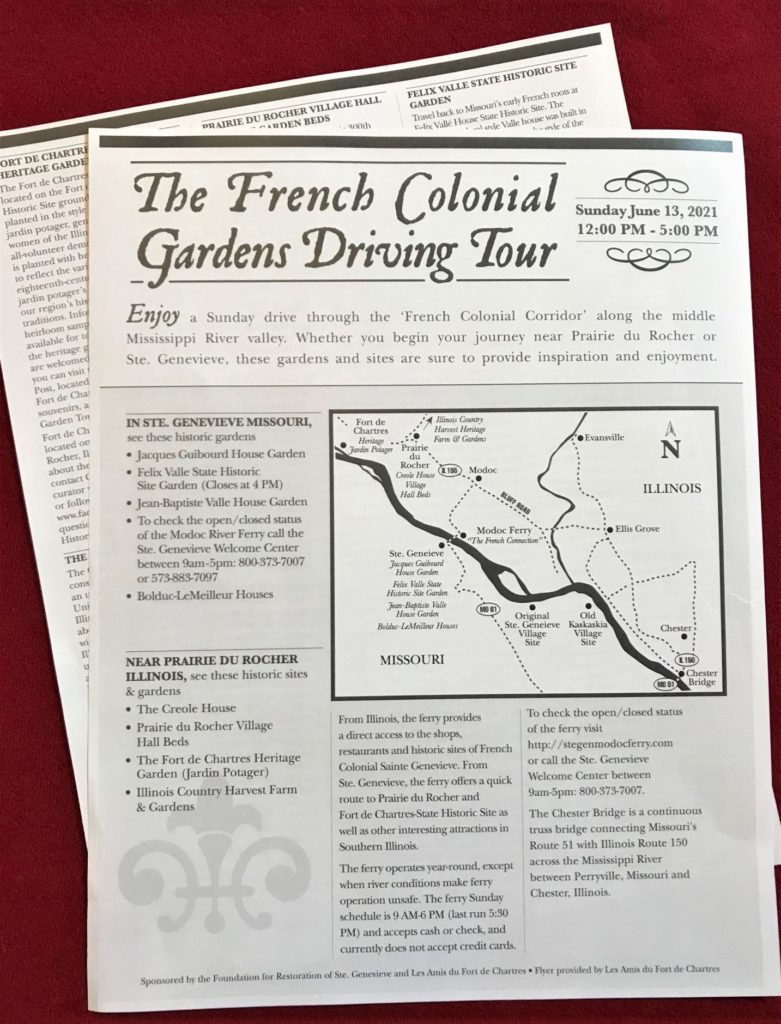
French Colonial Gardens Driving Tour 2021

This image has an empty alt attribute; its file name is IMG_5829-781x1024.jpg

Happily we announce the resumption of the French Colonial Gardens Driving Tour to be held on Sunday, June 13 from noon to 5 p.m. This annual garden tour is a collaboration effort between the historic garden sites of Prairie du Rocher, IL and Ste. Genevieve, MO, sponsored by the Foundation for the Restoration of Ste. Genevieve and Les Amis de Fort de Chartres. The first tour was held in 2016, but the Illinois side of the tour had to be canceled due to flooding concerns in 2019 and again last year due to COVID-19 pandemic restrictions. The tour can be offered once again in 2021 and we look forward to welcoming visitors during the garden tour to share our Illinois Country French Colonial garden heritage. This year the Pierre Menard Home will not be on the tour due to its current closure but instead, the Illinois Country Harvest Heritage Gardens and Farm will replace it on the tour. Thank you to Michell Baker for her past efforts in the Pierre Menard Home garden. The Fort de Chartres Trading Post will be open during the tour and Ste. Genevieve will be hosting their French Heritage Festival on June 12. Please join us as we jointly celebrate our French heritage in the Illinois Country.

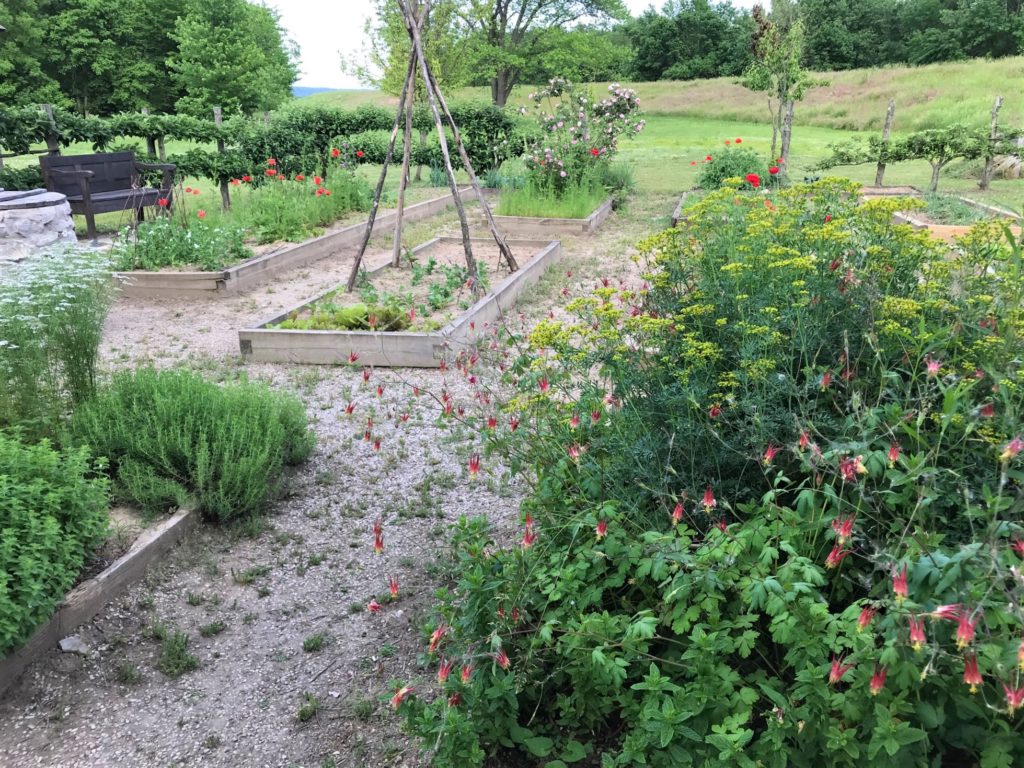
Fort de Chartres Heritage Jardin Potager welcomes tour visitors
on Sunday, June 13, noon-5 p.m.

For a printable copy of the full garden tour, please download the The French Colonial Gardens Driving Tour 2021 flyer. We hope to see you soon-à bientôt!

Encore!

18 mai 2021 mardi

71 degrees F, showers

12 mph, NNW wind

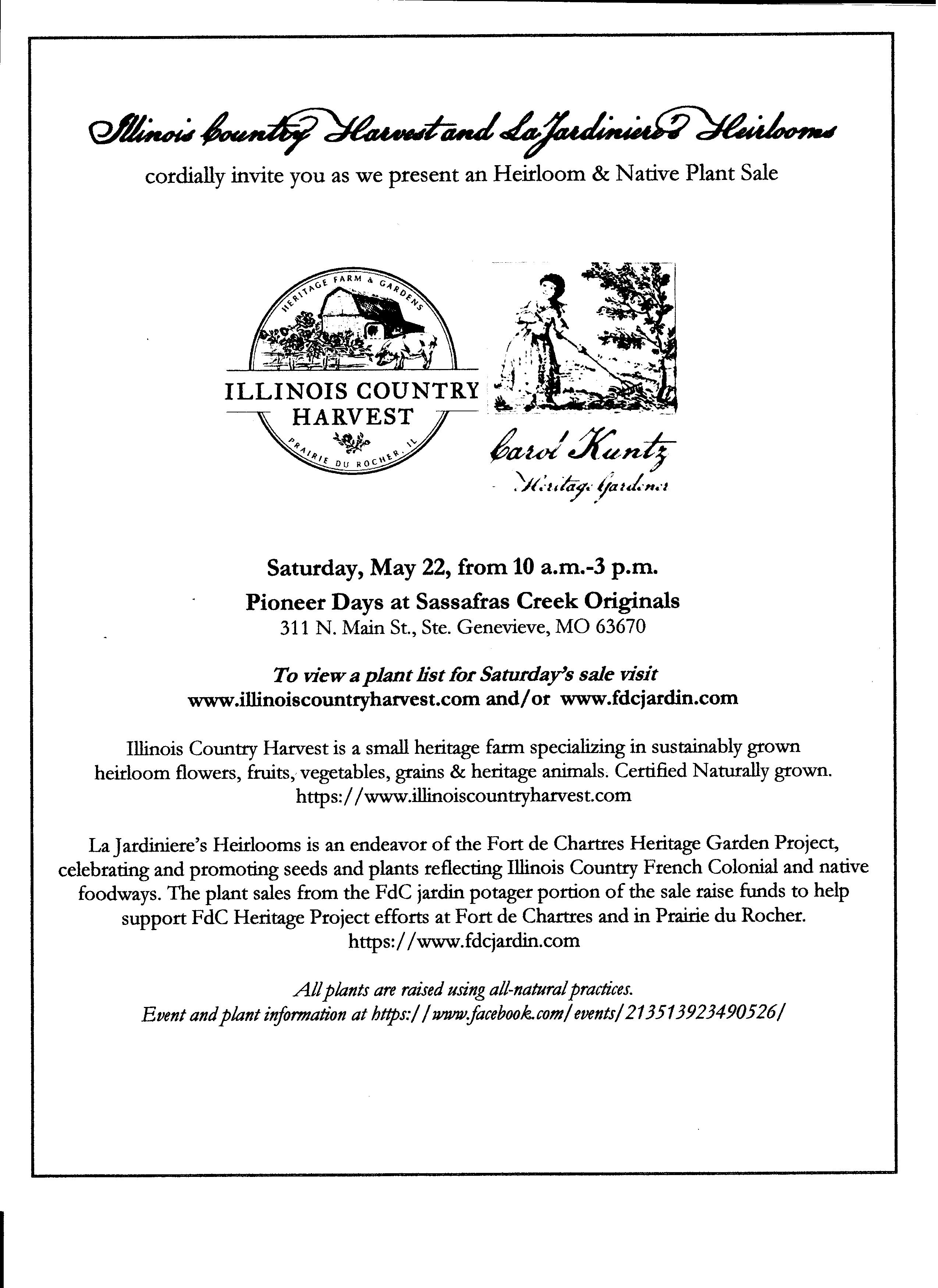
After a successful heirloom plant sale in Prairie du Rocher last weekend, Jennifer Duensing of Illinois Country Harvest and this jardiniere are looking forward to our next adventure, a heritage plant sale this Saturday, May 22 in Ste Genevieve. If you are in the area, we would love it if you stopped by!

Any questions? Please send an email to heritage@fdcjardin.com.

Vente de plantes

4 mai 2021 mardi

56 degrees F, light rain

11 mph, NNW wind

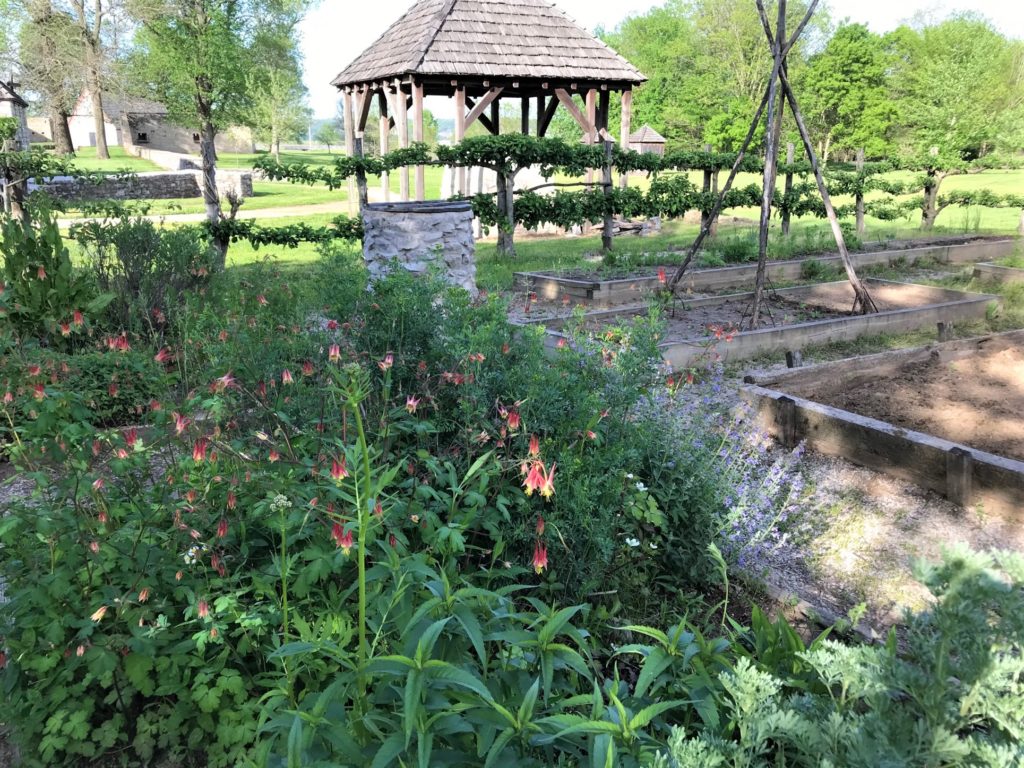
Gardens of the Illinois Country are progressing in fits and starts as daytime temperatures swing from sunny 80s to rainy 50s and back again. Overall the recent warmer days are winning the battle for more seasonal temperatures. The Fort garden is beginning to reflect the effects of these warmer temperatures as seeds, previously sown in the raised beds of the potager, continue breaking through the soil’s surface and this new garden life is thriving. And now is the time to begin to plant those annuals and perennials that have been just waiting on the sidelines for these warming temperatures.

The last two years have been challenging ones in the jardin due to the Fort site closures. In 2019, area flooding issues closed roads and 2020 saw limited site accessibility due to the challenges of COVID-19 mitigation efforts and restrictions. The Annual Fort de Chartres Heirloom Seed Swap was cancelled due to these closures over the past three years and there have been none of the usual Fort annual special events, leaving no opportunities to share heirloom seeds and plants as this garden project has in the past. With good news spreading across the region as outside restrictions are easing and the jardin potager now sees visitors daily. Unfortunately there have still been no new opportunities on site to share the garden’s seed and plant bounty.

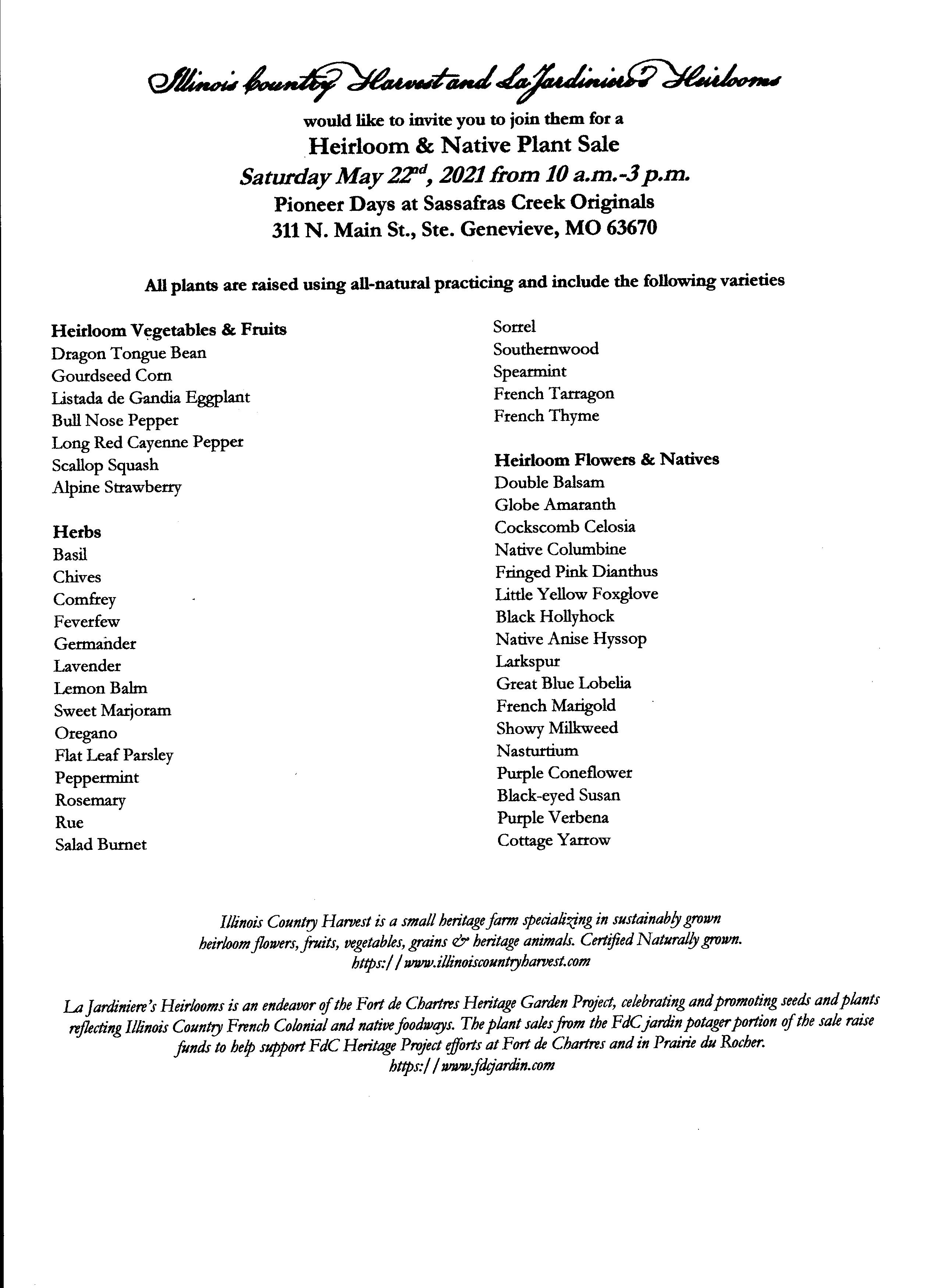
So it is with joy that we announce a local heritage plant sale collaboration between the Fort de Chartres Heritage Garden Project and the Illinois Country Harvest Farm and Gardens, located north on Rte 155 on the far side of Prairie du Rocher. Farm co-owner Jennifer Duensing and I will offer two outdoor plant sales May 15 & May 22, the first sale will be held at Jennifer & Jason’s farm, 9 a.m-noon, and the second sale will be held at Kandye Mahurin’s Sassafras Creek Originals, 10 a.m.-3 p.m., in Ste. Genevieve, MO-just across the river. Plant sale details can be located on the sale flyer pictured on this post and a list of plants can be found on this Heritage Plant Sale List.* Generally these heirloom plants are in 3″ pots and can be purchased for a price of $4, with a few very limited supply heirlooms available at special individual pricing.**

Please join us as we celebrate heirloom gardening and spring as we share our heritage garden and farm plants with you to enjoy in your own gardens. See you soon-à bientôt!

* This list will be updated between sale dates.

** All proceeds from La Jardiniere’s Heirlooms portion of the plant sales support the Fort de Chartres Heritage Garden Project.

« Older posts Newer posts »